Rīks: Tutor LMS Pro iebūvētais MI testa ģenerators | Temats: -ed/-ing adjectives | Grupa: pieaugušie, B1
Risināmā problēma
Tēmas noslēgumā vajadzīgs summatīvs tests, ko izglītojamie izpilda tieši platformā, kas vērtējas automātiski un kura rezultāts saglabājas katram izglītojamajam. Testam jāpārbauda prasme lietot -ed un -ing īpašības vārdus, nevis atcerēties mācību materiāla tekstu.
Izmantotais MI rīks
Tutor LMS Pro MI ģenerators testa veidotājā. Tam nav uzvednes lauka: var izvēlēties tikai tēmas, no kuru satura veidot jautājumus, jautājumu veidus, līmeni un jautājumu skaitu. Tātad šeit „uzvedne” ir mācību saturs, ko ģenerators lasa, un izvēlētie iestatījumi.
Aizkulises: Tutor MI testa ģenerators
Šo daļu izglītojamie neredz.
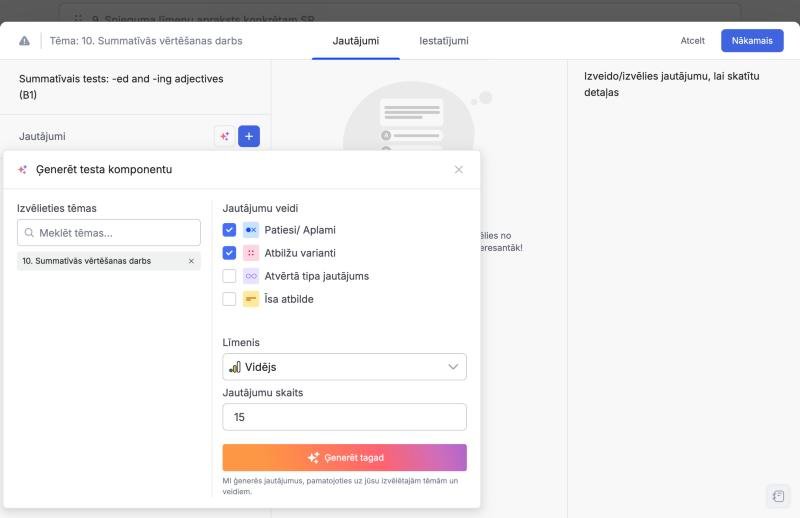
Sākotnējā „uzvedne” (avots un iestatījumi)
- Avots: tēma „Lesson bank” ar nodarbību par -ed/-ing īpašības vārdiem (skaidrojums, piemēri, stāsts „A surprising Saturday”).
- Jautājumu veidi: visi (patiesi/aplami, atbilžu varianti, atvērtie, īsās atbildes).
- Līmenis: vidējs; 15 jautājumi.
Sākotnējais rezultāts
Ģenerators izveidoja 15 jautājumus. Daļa pārbauda prasmi (formas izvēle, izruna, kļūdas labošana), bet daudzi jautā par pašu mācību materiālu: „according to the lesson”, kas notika stāstā, kurš vārdu pāris bija nodarbības sarakstā.
Skatīt sākotnējā testa jautājumus
- According to the lesson, what do -ed adjectives describe?
- Which sentence correctly uses an -ing adjective to describe the cause of a feeling?
- What is the difference in meaning between ‘He is bored’ and ‘He is boring’? (īsa atbilde)
- Which preposition follows ‘interested’ according to the lesson?
- Which TWO prepositions can follow ‘disappointed’ according to the lesson? (pareizās: with, by)
- Which expression does the lesson give as having the same meaning as ‘tired of’? (īsa atbilde)
- How is the -ed ending pronounced in ‘relaxed’, ’embarrassed’ and ‘shocked’?
- Which of these adjectives has its -ed ending pronounced /ɪd/?
- Why does ‘frightened’ end in /d/ rather than /ɪd/? (īsa atbilde)
- Why do Latvian speakers often say ‘I am boring’ when they mean ‘I am bored’?
- Which sentence is the corrected version of the typical mistake ‘I am interesting in history’?
- Correct the sentence ‘The film was bored.’ and explain briefly why it is wrong. (īsa atbilde)
- In the example story, how did Saturday turn out compared to how it was supposed to be?
- In the example story, what surprising thing happened in the evening…? (īsa atbilde)
- Which pair of words from the lesson’s list of common pairs is matched correctly?
Nākamajā sadaļā: izvērtējums un uzlabojumi.